
Practical Impact of SRMAs Under the Conference Spotlight
Lara Scadding of School Business Services looks back on the illuminating insights and impact to emerge from the 2026 SRMA conference.
Real, practical impact on the bottom line of schools and trusts was the overwhelming message from this year’s SRMA conference.
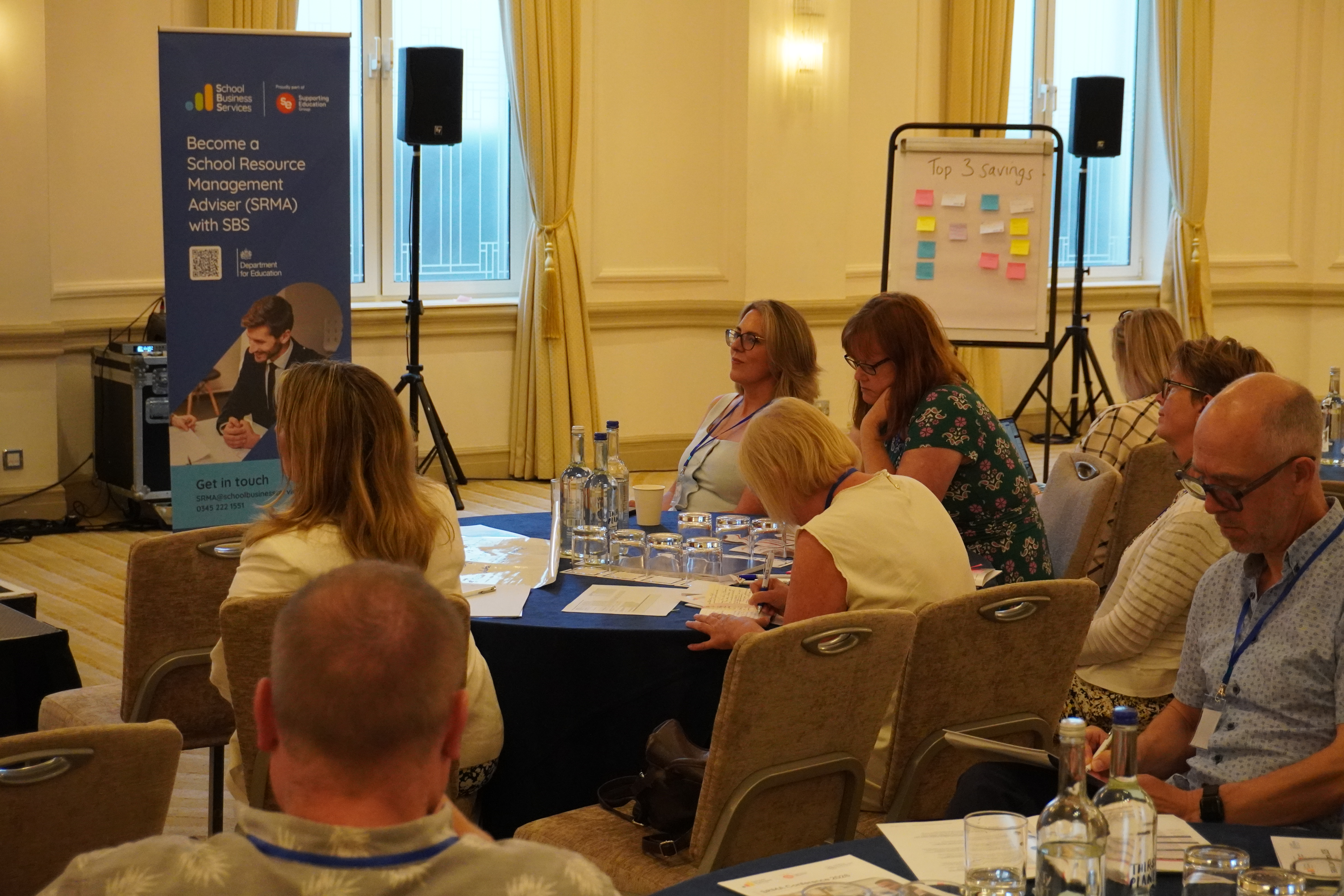
On the hottest day of 2026, SRMAs from across the country gathered in the air-conditioned Hilton Paddington, in London, to share insights and best practice in resource management.
Hosted by School Business Services and North Yorkshire Council, this years' SRMA conference was a chance to gather as a community, celebrate achievements and reaffirm a shared purpose in supporting schools.
Alison Perry, Head of the Department for Education’s School Resource Management Adviser Programme, shared updates from the DfE and details about the SRMA programme’s real impact.
She explained that since the start of the current SRMA contract in January 2025 there had been 621 full deployments, 175 follow-up deployments, and 98 completed mentoring matches.
The impact of that work is emerging, but the indications are that the schools and trusts that have received SRMA support are projecting savings of almost £200 million over the three years following the support, she said.
Alison and her team presented several case studies of SRMA support. These included a trust which faced severe financial challenges in late 2023. Key issues included overstaffing and a depleted finance team. Support, including multiple SRMA deployments and other ongoing assistance, has now helped to stabilise the trust’s finances and strengthen long-term management.
Delegates also heard about a rapid SRMA review of another trust with a deficit of almost £500,000 – the result of serious financial issues including accounting errors linked to the previous leadership. The review, alongside a newly appointed CFO, has identified a range of issues including financial reporting and overstaffing.
There was a packed programme of keynote speeches during the day on topics ranging from making reserve balances work harder to the implications of AI.
Steve Howell, Commercial Director at Red Kite Learning Trust focused his presentation on making every pound count, discussing key areas of activity that could deliver further meaningful savings.
He urged delegates to ask themselves when they last reviewed their banking arrangements and whether they felt they were getting competitive interest rates on their reserve balances.
He outlined one SRMA report which described how at the time of the SRMA visit the school’s bank balance was £319,000, and that the lowest it got over the preceding 12 months was still £215,000. The budgeted interest receivable for 2025/26 was just £30.
The SRMA’s recommendation that the school should review options for investing its surplus cash at a competitive rate of interest, taking care to distinguish between cash that was unlikely to be needed in the short to medium term and cash needed for short-term cash flow.
With interest rates of 4% achievable, the school could in the future expect a return of at least £8,000 a year based on a longer-term investment of £200,000.
The IFS’s Darcy Snape and SBS SRMA Mark O’Brien provided a richly detailed insight into the challenges and trade-offs in mainstream SEND support, while SRMA Andy Hamilton explored the reality of how SRMAs could do to support schools and trusts with a focus on the role of Integrated Curriculum Financial Planning.
Feedback from delegates included praise for an engaging and thought-provoking programme, highlighting an excellent opening session exploring ways SRMAs can make a difference in five days from SRMA Rebecca Beaver, Rachel Botley’s insightful session on governance, and Darcy and Mark’s examination of the current SEND landscape.
Attendees also valued Andy’s exploration of Integrated Curriculum and Financial Planning (ICFP), particularly the practical guidance on how it can be used to inform strategic decision-making and recommendations.
Speakers received consistently positive feedback, with delegates describing sessions as informative, inspiring and highly relevant to their roles. The conference also offered valuable opportunities to network, share experiences with colleagues and gain fresh ideas for improving practice, including report writing.
The upbeat verdict of delegates can be summed up with this comment from one:
“The speakers were brilliant, and the conference provided a valuable opportunity to share experiences with colleagues, gain fresh ideas and strengthen our practice.”
If you have any questions for our SRMA team, please contact us.
Become an SRMA with SBS
Get sector Insights delivered straight to your inbox.
Subscribe to to the SBS Blog and never miss an update.